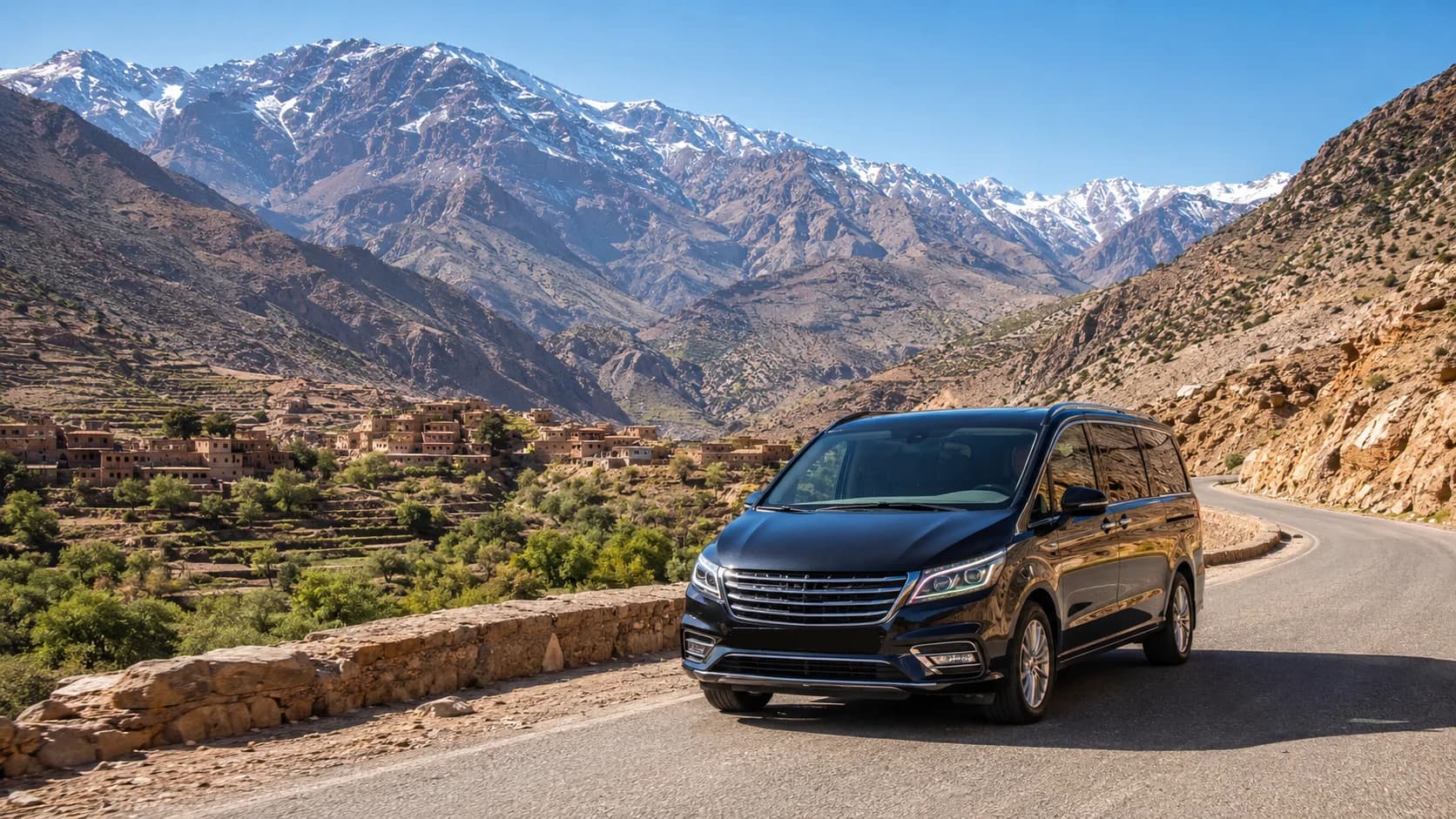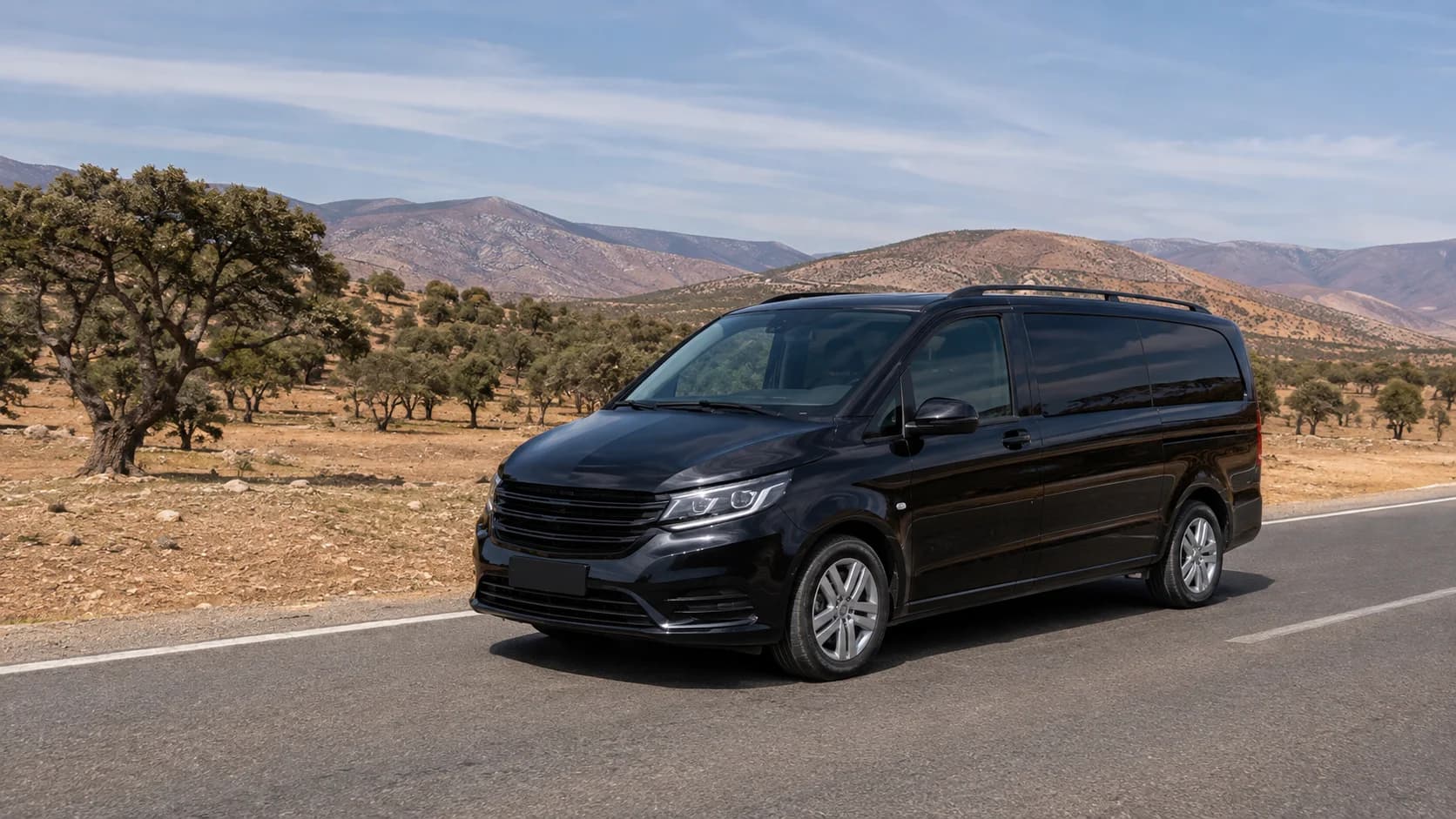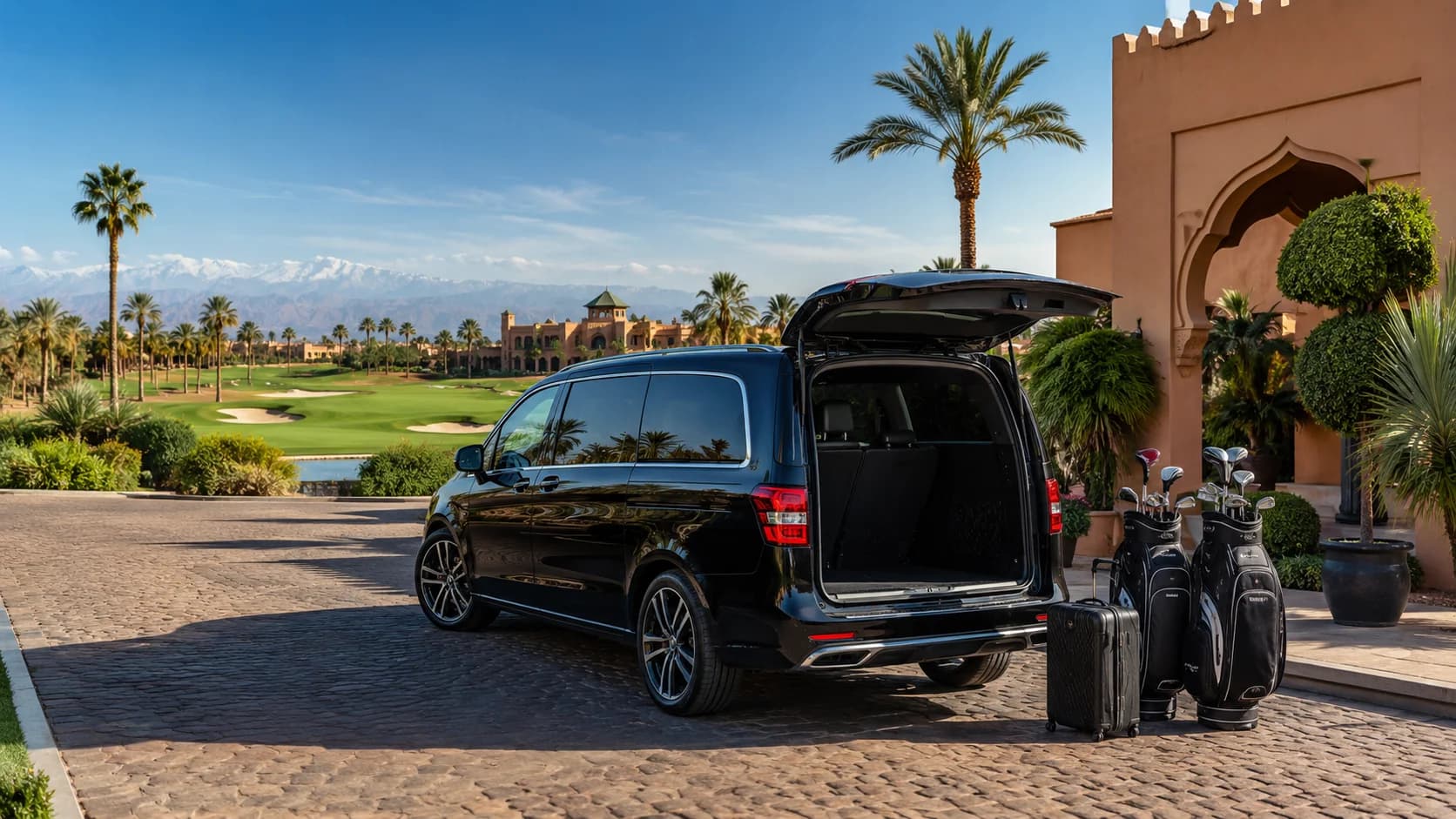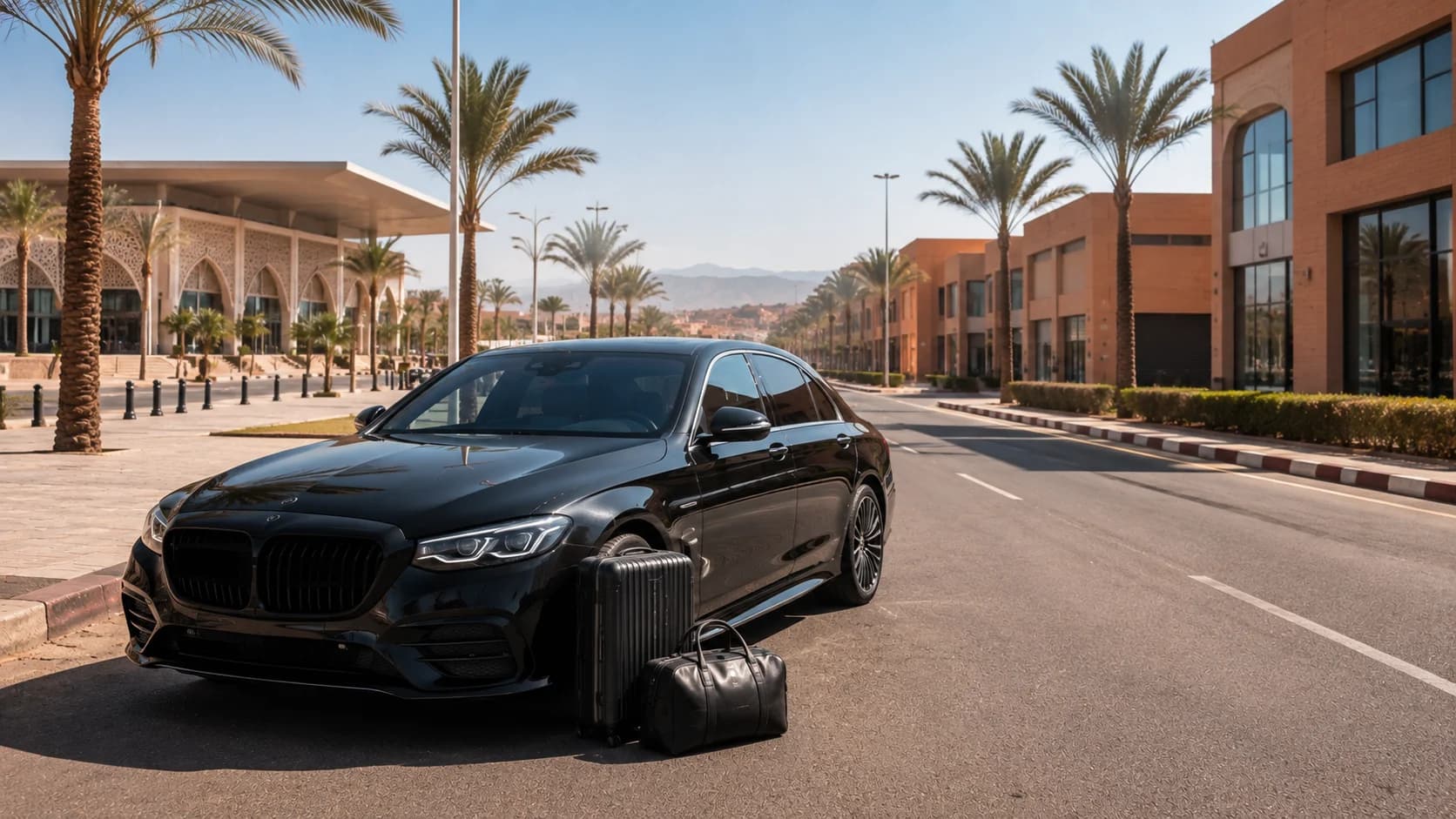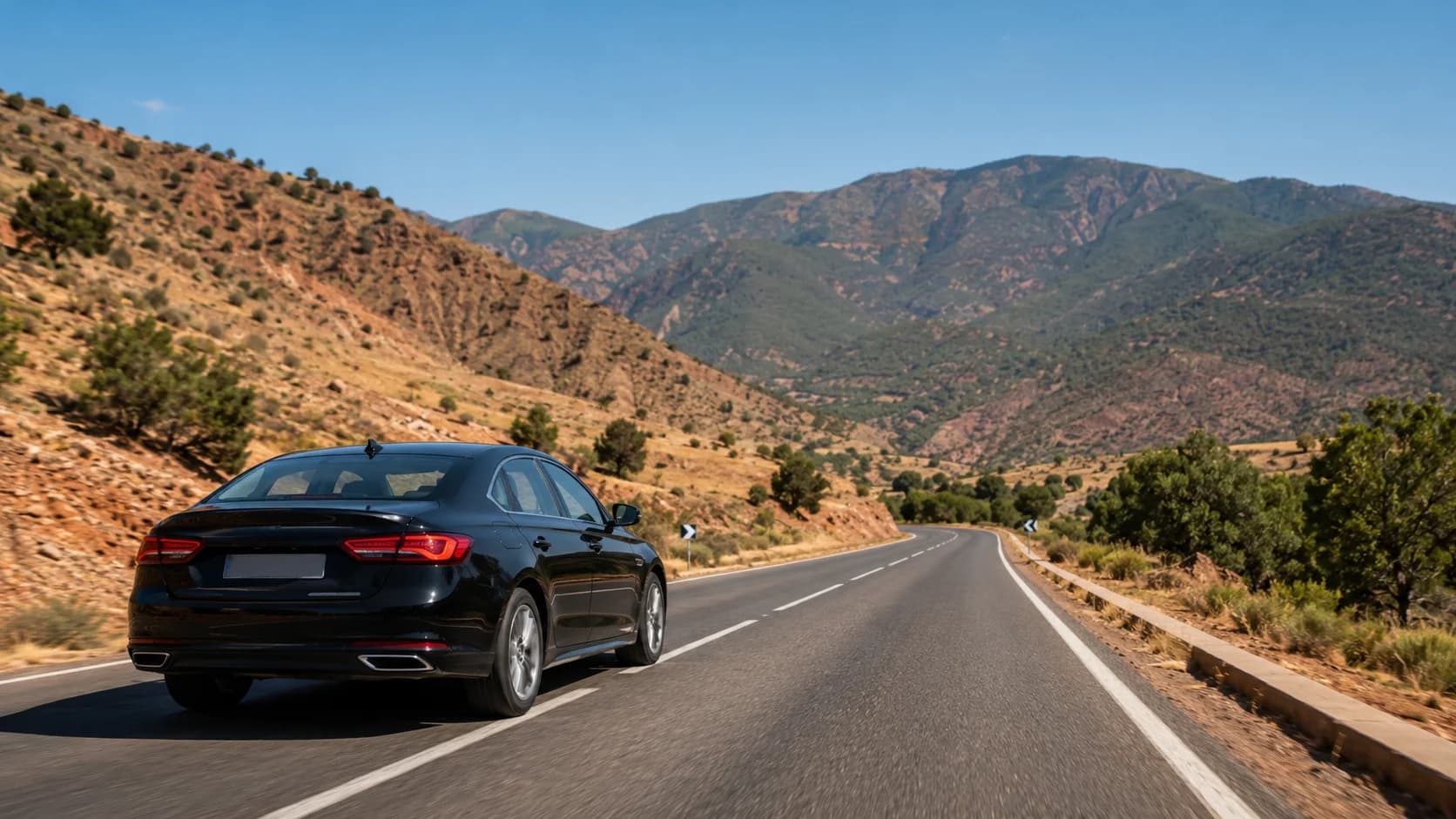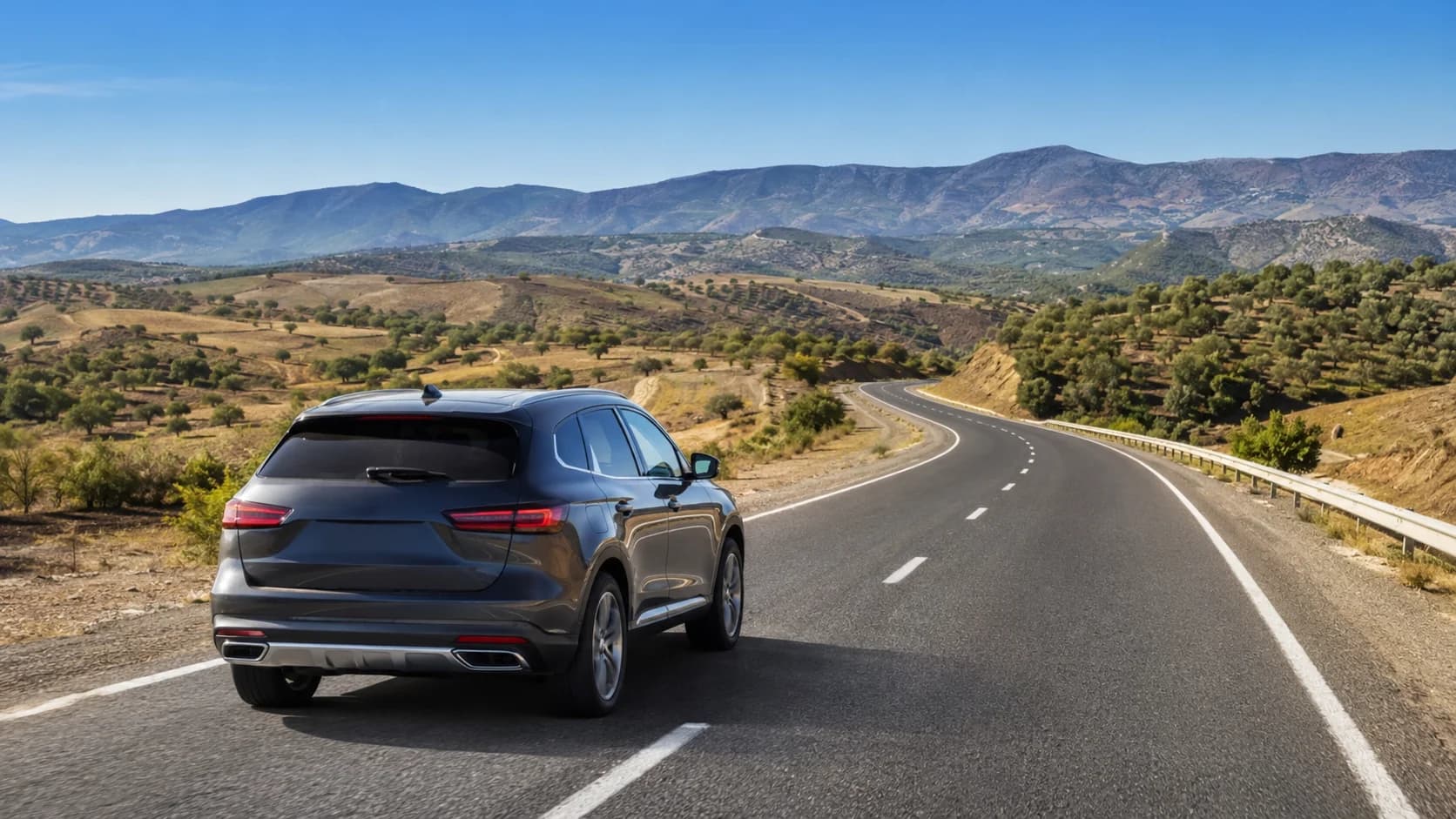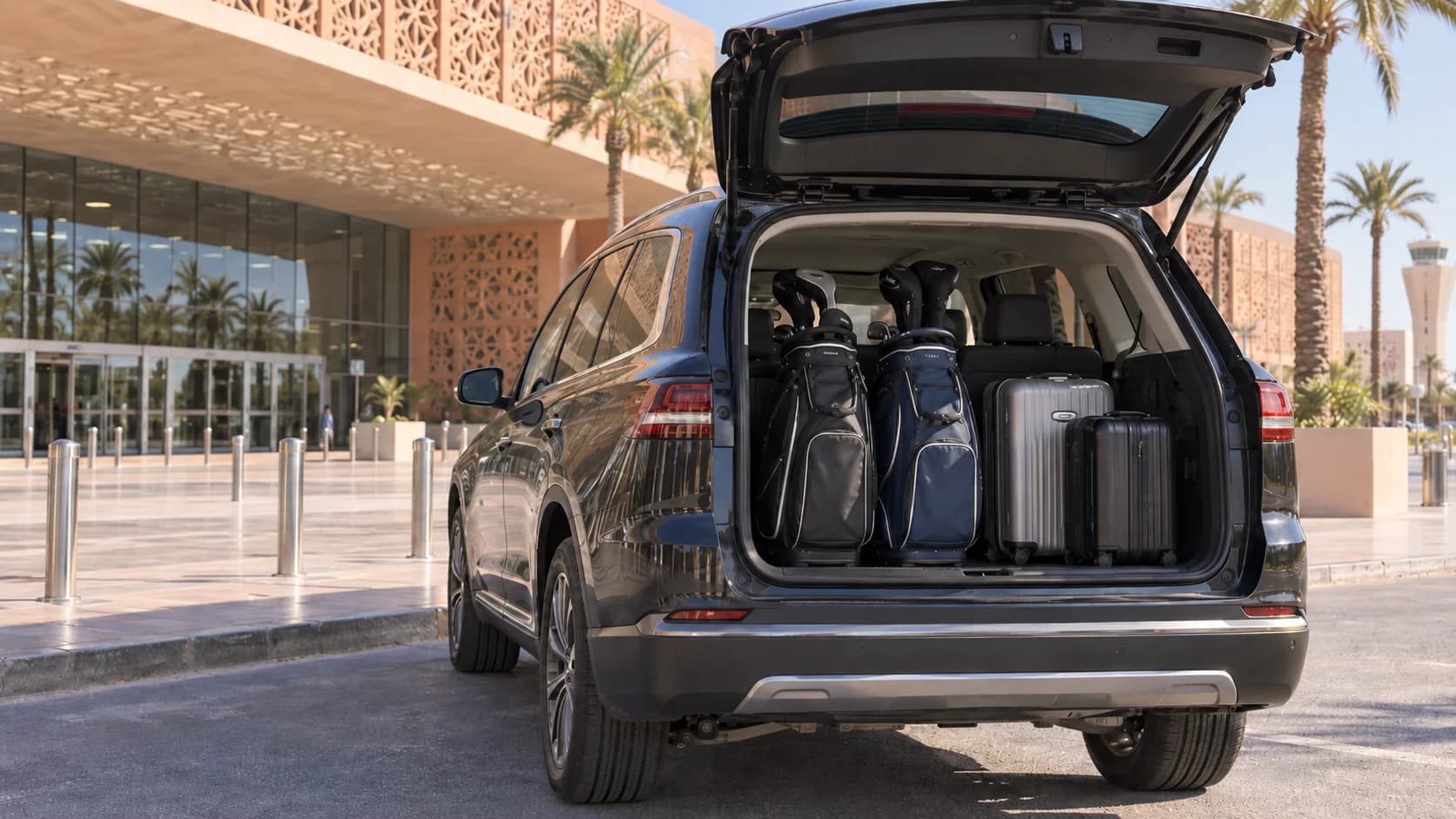








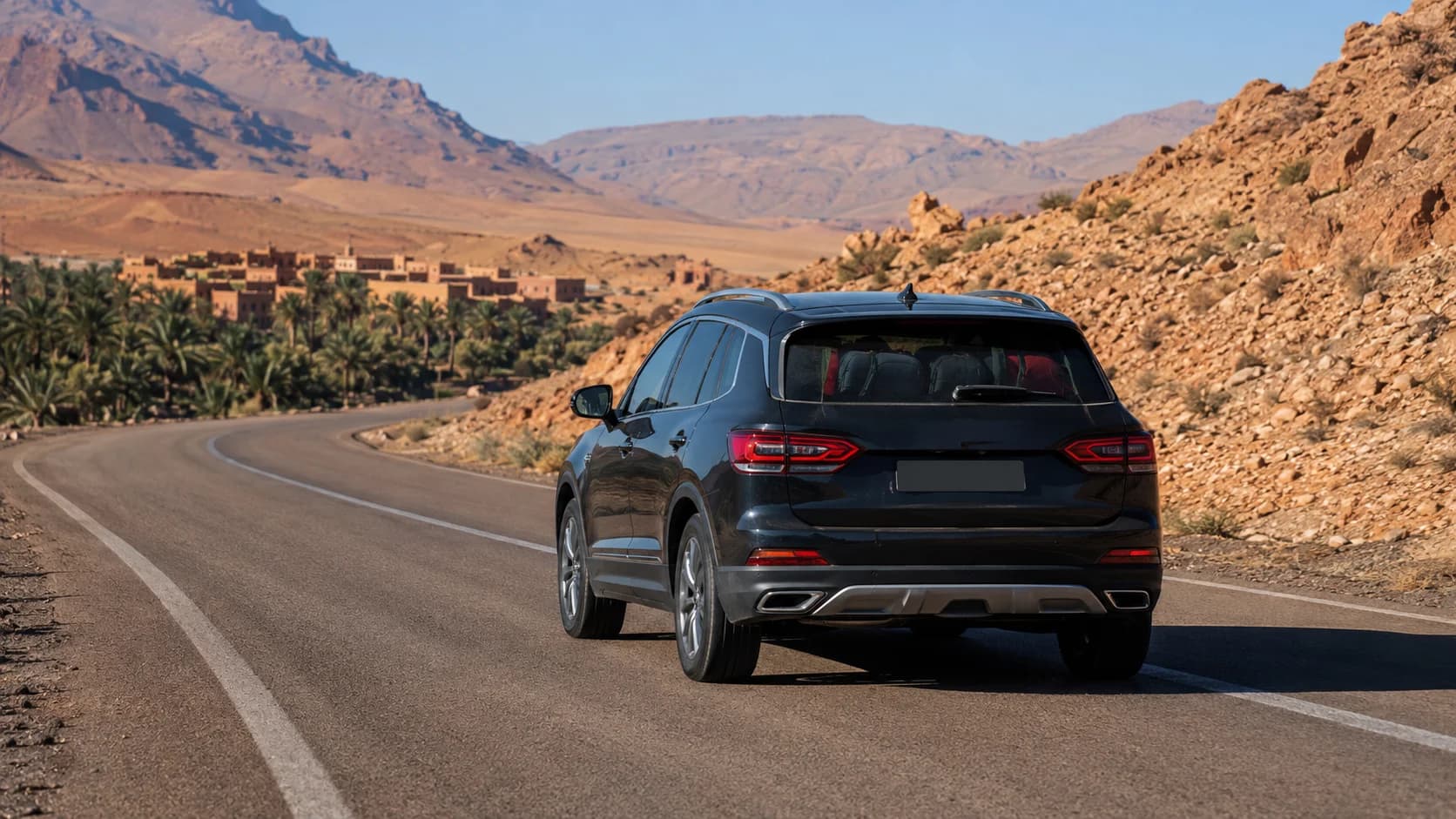
A Marrakech to Merzouga private transfer is one of the longest and most scenic intercity journeys available from Marrakech. The route crosses the High Atlas Mountains, passes through Ouarzazate and the valleys of southern Morocco, and continues toward Erfoud and the dunes near Merzouga.
The journey is practical with a professional private driver, but it requires realistic scheduling. Depending on the exact pickup location, selected route, traffic, weather and number of breaks, travellers should expect approximately 540 to 560 kilometres of road travel. Pure driving time may be around nine hours, but a comfortable door-to-door transfer commonly takes longer once meal stops, rest breaks and mountain-road conditions are included.
This guide explains the route, overnight options, rest-stop planning, luggage considerations and how to choose between a sedan, SUV and minivan.
Table of Contents
- Is a private transfer practical?
- Marrakech to Merzouga route overview
- Why the journey is longer than a day trip
- Direct transfer vs overnight stop
- Mountain passes, valleys and desert roads
- Rest, meal and comfort stops
- Choosing a sedan, SUV or minivan
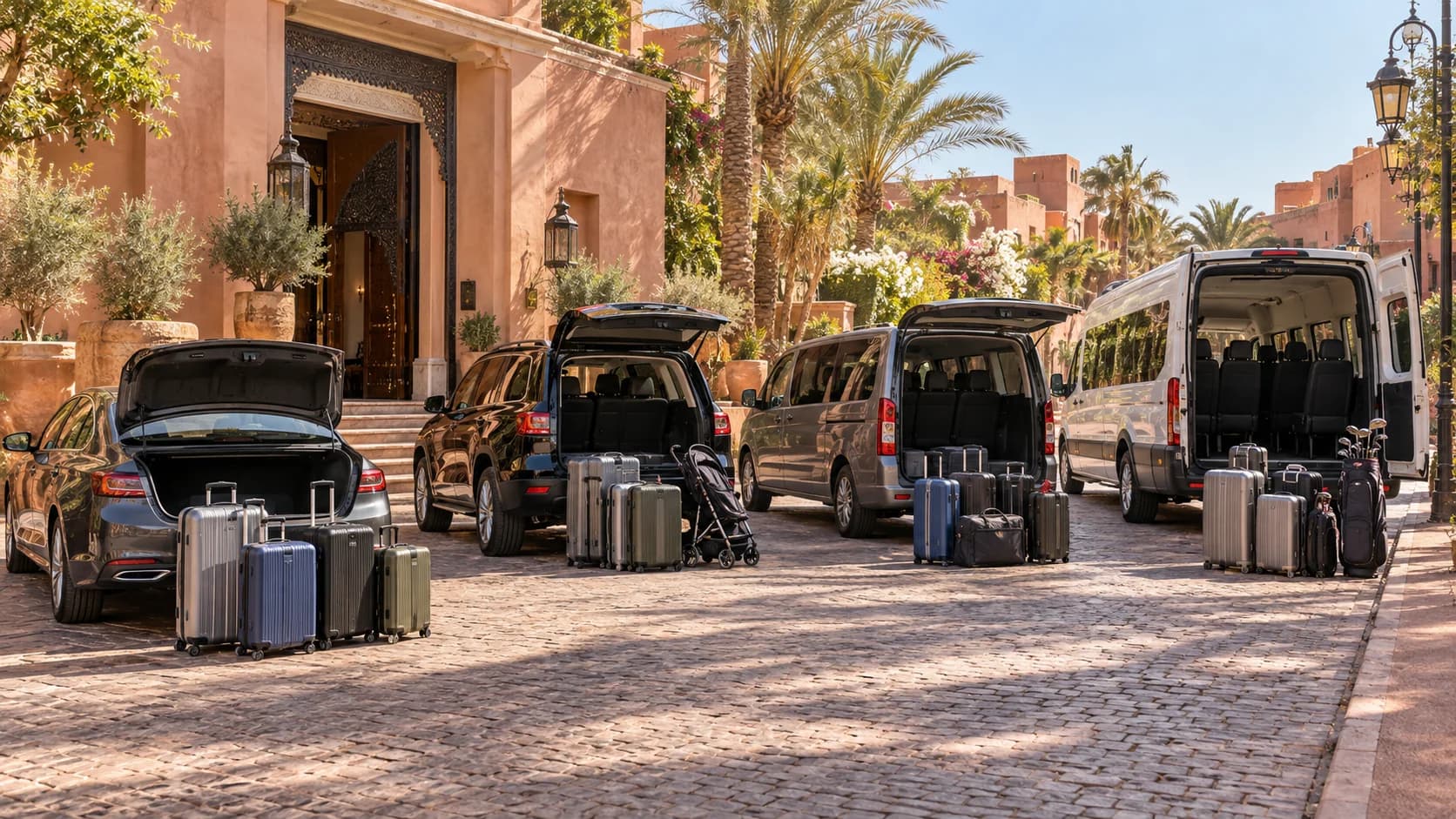
- Luggage and family considerations
- What is and is not included
- How to book the intercity transfer
- Frequently asked questions
Is a Private Transfer Practical?
Yes. A private transfer from Marrakech to Merzouga is practical for travellers who want door-to-door transportation, a private vehicle and a schedule adapted to their group.
However, it should not be treated like a short airport transfer or an ordinary day trip. Marrakech and Merzouga are separated by a long mountain and desert-road corridor. The trip includes winding roads, changing elevations and long stretches between major towns.
A direct transfer can be completed in one day when passengers leave early and limit sightseeing stops. A more relaxed option is to divide the journey with an overnight stay around Ouarzazate, the Dadès Valley, Boumalne Dadès or Tinghir.
The best choice depends on:
-
The passengers’ ages and mobility
-
The amount of luggage
-
The planned arrival time in Merzouga
-
Whether the group wants sightseeing stops
-
The season and expected road conditions
-
Whether a desert camp has a fixed check-in or activity time
A private transfer provides transportation and planned stops. It should not automatically be considered a complete desert excursion unless activities, guides and accommodation are specifically included in writing.
Marrakech to Merzouga Route Overview
The classic road route generally leaves Marrakech on the N9 and climbs through the High Atlas Mountains toward the Tizi n’Tichka Pass. It then descends toward Ouarzazate before continuing east through the southern valleys.
From the Ouarzazate region, the journey normally follows the N10 through or near Skoura, Kalaat M’Gouna, Boumalne Dadès and Tinghir. The final section continues toward the Tafilalt area, Erfoud, Rissani and Merzouga. Route details may vary according to road conditions, the driver’s operational plan and the passengers’ requested stops.
The broad travel corridor includes several distinct regions:
Marrakech and the Haouz Plain
The journey begins in Marrakech, usually with pickup from a hotel, riad, private residence or Marrakech Airport. Pickup from a riad may require coordination because some properties inside the medina are not directly accessible by vehicle.
The driver may arrange to meet passengers at the closest accessible street or recognised pickup point.
The High Atlas Mountains
After leaving Marrakech, the road begins climbing through the High Atlas. This section contains bends, elevation changes and slower-moving vehicles.
Journey time cannot be estimated using motorway speeds. Even when the road is open and conditions are good, the mountain section requires controlled driving and additional time.
Ouarzazate and the Pre-Sahara
Ouarzazate is one of the main transport points between Marrakech and southeastern Morocco. The Moroccan National Tourist Office presents the wider Ouarzazate, Zagora and Tinghir region as a gateway to kasbah landscapes, valleys and the roads leading toward the desert.
Ouarzazate can be used as a meal stop, rest point or overnight location.
Dadès and Tinghir Region
East of Ouarzazate, the route passes through a landscape of palm groves, small towns, cultivated valleys and rocky plateaus.
Travellers who divide the transfer over two days often stay around Boumalne Dadès or Tinghir. These locations reduce the amount of driving required on the second day while allowing a more comfortable first day.
Erfoud, Rissani and Merzouga
The final part of the journey enters the Tafilalt and desert-edge region. Erfoud and Rissani are important towns before Merzouga.
Merzouga is associated with the Erg Chebbi dune area and is recognised by Morocco’s tourism authorities as one of the country’s major Sahara destinations.
The final meeting point should be confirmed carefully because the requested destination may be:
-
A hotel in Merzouga village
-
A guesthouse near the dunes
-
A camp operator’s reception point
-
A roadside meeting location
-
A desert accommodation transfer point
Not every desert camp is reached by the same type of standard road vehicle.
Why the Journey Is Longer Than a Day Trip
The Marrakech to Merzouga route is often described online as a nine-hour drive. That figure usually represents approximate driving time under favourable conditions, not a complete passenger itinerary.
A realistic transfer takes longer because of:
-
Hotel or riad pickup arrangements
-
Traffic when leaving Marrakech
-
Mountain-road speeds
-
Toilet and refreshment breaks
-
Lunch or dinner stops
-
Fuel stops
-
Seasonal weather
-
Roadworks or temporary traffic controls
-
Passenger comfort requirements
-
Coordination with accommodation in Merzouga
The direct road journey is commonly estimated at around 540 to 560 kilometres and approximately nine to ten hours without extended sightseeing.
Adding three short comfort stops and a proper meal can move the total transfer duration closer to eleven or twelve hours.
That is why a same-day transfer normally requires an early departure from Marrakech. Leaving late in the morning can result in arrival after dark, especially during months with shorter daylight hours.
Travellers should also distinguish between a transfer and a sightseeing itinerary. A direct transfer may include practical breaks, but lengthy visits to Aït Ben Haddou, film studios, the Dadès Gorge or the Todra Gorge can turn the journey into a multi-day route.
Direct Transfer vs Overnight Stop
Both options are possible, but they serve different types of travellers.
Direct Same-Day Transfer
A direct transfer is suitable when the priority is reaching Merzouga in one day.
It works best for:
-
Adults comfortable with long road journeys
-
Couples or small groups travelling light
-
Passengers with flexible arrival arrangements
-
Travellers who do not require major sightseeing visits
-
Groups able to depart Marrakech early
The day should still include reasonable rest, meal and toilet stops. A direct transfer does not mean driving without breaks.
Passengers should avoid scheduling a time-sensitive desert activity immediately after the expected arrival. Delays can occur, and a long road journey may leave little time to check in or prepare.
Overnight Transfer
An overnight stop is normally more comfortable for families, older passengers and travellers who want to see places along the route.
Common overnight areas include:
-
Ouarzazate
-
Skoura
-
Boumalne Dadès
-
Dadès Valley
-
Tinghir
Ouarzazate creates a relatively balanced first day from Marrakech, although the second day remains substantial. Staying farther east, around Boumalne Dadès or Tinghir, places passengers closer to Merzouga on the second day.
Accommodation should normally be booked separately unless the written transfer quotation specifically includes it.
Two-Day Scenic Itinerary
A two-day journey can include planned sightseeing, but the schedule must remain realistic.
A possible structure is:
Day one: Marrakech pickup, High Atlas crossing, lunch or visit around Aït Ben Haddou or Ouarzazate, then overnight in Ouarzazate or the Dadès region.
Day two: Continue through Tinghir, Erfoud and Rissani before arriving in Merzouga.
Every additional visit increases the travel time. The itinerary should specify whether the driver is providing transportation only or waiting during paid attractions and guided visits.
Mountain Passes, Valleys and Desert Roads
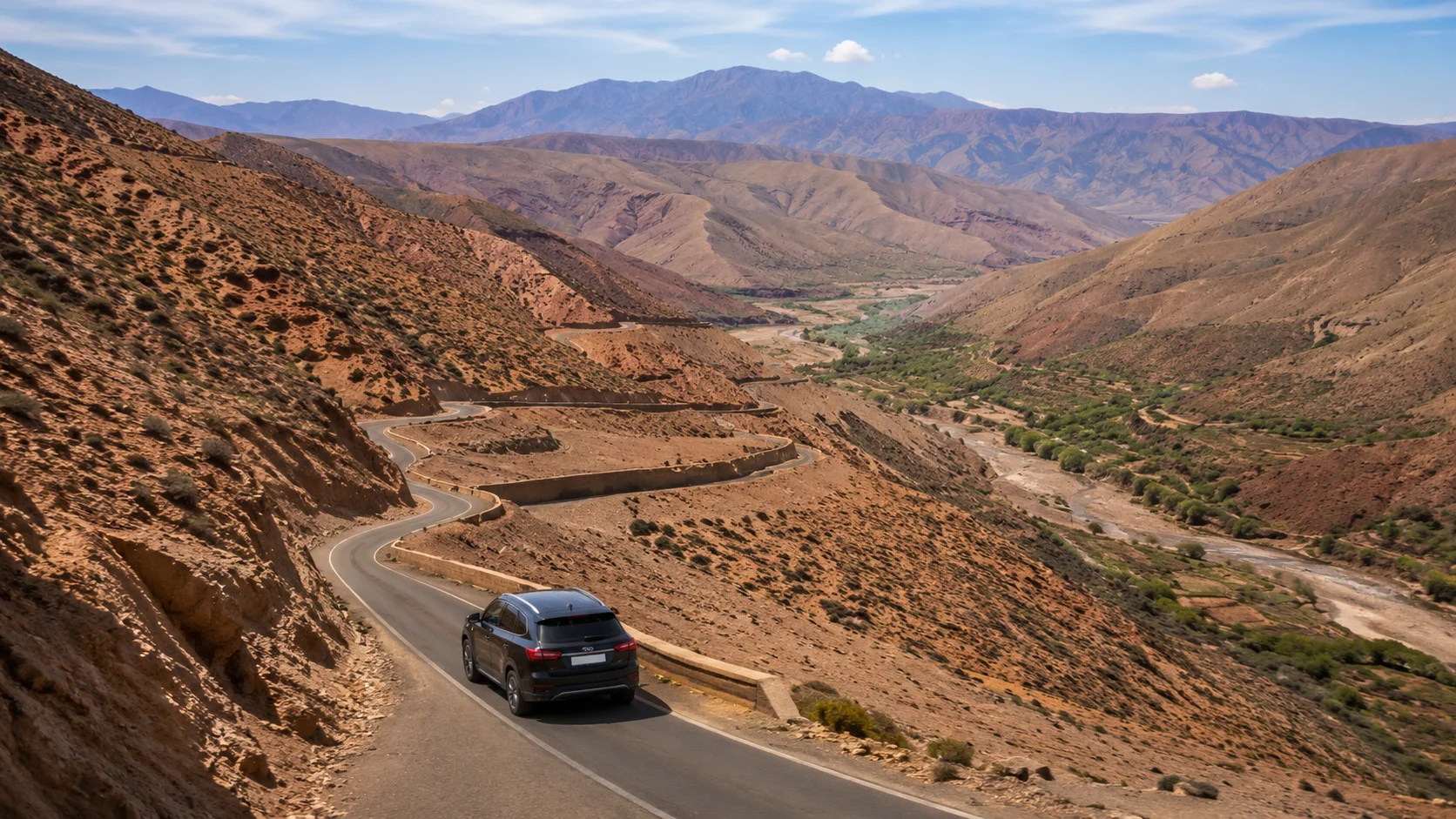
The road changes significantly between Marrakech and Merzouga.
High Atlas Conditions
The Tizi n’Tichka section is elevated and winding. Travel can be affected by rain, fog, cold temperatures or winter weather.
The driver may need to adjust the departure time, reduce speed or modify the route if conditions require it. Passengers travelling during winter should avoid building an inflexible itinerary around an exact arrival minute.
People who experience motion sickness may prefer:
-
A front passenger seat when appropriate
-
A lighter meal before departure
-
Regular fresh-air stops
-
A smooth, spacious vehicle
-
Advance notice to the transport provider
Valley Roads
After Ouarzazate, the landscape becomes more open, but the route still passes through towns, junctions and slower road sections.
The scenery changes from mountain terrain to palm valleys, rocky plateaus and arid landscapes. The official Moroccan tourism website highlights the Dadès area and the wider Ouarzazate-Tinghir region for its winding roads, gorges and kasbah scenery.
Final Approach to Merzouga
The main road toward Merzouga is generally accessible to normal passenger vehicles. However, the final approach to a specific desert camp may involve a different meeting arrangement.
Some camps organise their own four-wheel-drive shuttle from a hotel, reception area or agreed parking point. The private transfer company must therefore receive the exact accommodation name and arrival instructions before departure.
A standard intercity driver should not be expected to drive onto unmarked sand tracks unless that access has been confirmed as suitable and included in the service.
Rest, Meal and Comfort Stops
Break planning is part of a safe and comfortable long-distance transfer.
Stops can be arranged for:
-
Toilets
-
Coffee or refreshments
-
Lunch
-
Stretching and fresh air
-
Infant or child care
-
Driver rest
-
Prayer when requested
-
Photography at a safe stopping place
Stops should be made at appropriate roadside businesses, restaurants, service stations or recognised viewpoints. Passengers should not request sudden stops on bends, narrow mountain shoulders or unsafe sections of road.
A practical direct-transfer schedule may include:
-
A short stop during or after the mountain section
-
A meal break around Ouarzazate or farther east
-
A second comfort stop before Erfoud or Rissani
-
Additional short stops for children or older passengers
Meal costs are normally paid by the passengers unless otherwise stated. The quotation should make clear whether planned waiting time is included and whether major detours carry an additional charge.
Driver rest is also important. A professional transfer schedule should allow the driver to pause during a journey of this length rather than treating every stop as an inconvenience.
Choosing a Sedan, SUV or Minivan
Vehicle choice should be based on passengers, luggage and comfort rather than appearance alone.
Sedan
A private sedan may suit:
-
One or two passengers
-
Couples with standard suitcases
-
Business travellers
-
Passengers prioritising privacy and efficiency
A sedan can complete the main paved route, but boot capacity must be checked carefully. Two travellers carrying several large suitcases, cabin bags and desert equipment may need a larger vehicle.
Book a private intercity transfer from Marrakech with the complete passenger and luggage details provided in advance.
SUV
An SUV provides additional cabin space, luggage flexibility and a higher seating position. It can be a good choice for:
-
Two to four passengers
-
Travellers carrying several large bags
-
Families wanting more space
-
Passengers who prefer a higher vehicle
-
Trips involving rural hotel access
An SUV does not automatically mean that off-road desert driving is included. Access beyond the paved road must still be confirmed.
Explore the available Marrakech SUV transfer options before requesting a quote.
Minivan
A minivan is generally the best option for:
-
Families
-
Groups of four or more passengers
-
Travellers with several suitcases
-
Passengers carrying a stroller
-
Groups needing additional legroom
-
Older passengers who want easier access
-
Travellers carrying child equipment
The exact passenger and luggage capacity depends on the vehicle model. Filling every passenger seat may reduce the available luggage space.
A minivan transfer in Marrakech should therefore be reserved according to the real baggage volume, not only the number of travellers.
Luggage and Family Considerations
The provider needs accurate information before assigning a vehicle.
Passengers should specify:
-
Number of adults
-
Number and ages of children
-
Number of large suitcases
-
Number of cabin bags
-
Strollers or pushchairs
-
Wheelchairs or mobility aids
-
Sports or photography equipment
-
Child-seat requirements
-
Any unusually large items
Describing the luggage as “normal” is not always sufficient. A family of five with five full-size suitcases and a stroller may require a different vehicle from five adults with small backpacks.
Travelling With Children
Children may find a direct eleven-hour travel day tiring. Families should consider:
-
An overnight stop
-
More frequent breaks
-
An early but not excessively rushed departure
-
Snacks and water
-
Suitable child seats requested in advance
-
A minivan with accessible luggage space
-
Avoiding a late-night desert arrival
Child-seat availability, size and installation should be confirmed before payment.
Older Passengers
Older passengers may benefit from a vehicle with comfortable entry, supportive seating and additional legroom.
An overnight stop can reduce fatigue. It also allows passengers to avoid spending the full day inside the vehicle.
Bulky Luggage
Large equipment can affect the required vehicle class. Surfboards, bicycles, multiple camera cases and oversized suitcases must be declared before the booking is accepted.
Items should not be placed loosely inside the passenger cabin if they could interfere with comfort or safe travel.
What Is and Is Not Included
A Marrakech to Merzouga private transfer normally focuses on private transportation between agreed locations.
A standard quotation may include:
-
Private vehicle
-
Professional driver
-
Pickup in an agreed Marrakech location
-
Transportation to the agreed Merzouga destination
-
Fuel
-
Normal road charges
-
Reasonable comfort stops
-
Agreed luggage allowance
The exact inclusions depend on the written offer.
Items that may not be included automatically include:
-
Hotel accommodation
-
Desert camp accommodation
-
Meals and drinks
-
Local guides
-
Entry tickets
-
Camel rides
-
Quad-bike activities
-
Four-wheel-drive camp shuttles
-
Extended sightseeing visits
-
Unplanned detours
-
Driver waiting during activities
-
Return transportation
-
Additional travel on later days
The transfer should not be advertised or understood as a desert tour unless the booking clearly lists tour services.
Desert Accommodation
Desert accommodation is normally reserved separately. The passenger should send the provider:
-
Full camp or hotel name
-
Reservation name
-
Contact number
-
Map location when available
-
Camp arrival instructions
-
Required meeting time
-
Whether a separate shuttle is provided
This prevents confusion between Merzouga village, a roadside hotel and a remote camp meeting point.
Driver Waiting
A driver may be able to wait during an activity, but this must be requested before the price is confirmed.
Waiting for several hours, remaining overnight or continuing to another city changes the service scope. These arrangements should appear in the written itinerary.
How to Book the Intercity Transfer
A precise request produces a more accurate quotation.
Send the following details:
-
Travel date
-
Preferred pickup time
-
Exact Marrakech pickup location
-
Exact destination in Merzouga
-
Number of adults and children
-
Children’s ages
-
Number and size of bags
-
Preferred vehicle type
-
Direct or overnight itinerary
-
Requested meal, rest or sightseeing stops
-
Child-seat or accessibility requirements
-
Desert accommodation meeting instructions
-
Whether the trip is one-way or part of a longer itinerary
The provider should respond with a written summary containing:
-
Pickup and destination
-
Vehicle category
-
Passenger capacity
-
Luggage allowance
-
Planned route
-
Included stops
-
Estimated duration
-
Price and payment conditions
-
Cancellation terms
-
Included and excluded services
Journey times should be presented as estimates rather than guarantees. Mountain conditions, traffic, passenger stops and local access can change the final arrival time.
Frequently Asked Questions
How long is the private transfer from Marrakech to Merzouga?
The direct drive is generally estimated at approximately nine to ten hours, but a realistic private transfer can take eleven or twelve hours after pickup, meal stops, comfort breaks and traffic are included. The exact duration depends on the route, season and final destination.
Can Marrakech to Merzouga be done in one day?
Yes. It can be completed in one day with an early departure and limited sightseeing. It is a demanding travel day, so passengers should still plan proper meal and rest breaks.
Is it better to stop overnight on the way?
An overnight stop is usually more comfortable for families, older travellers and anyone wanting to visit attractions along the route. Ouarzazate, Boumalne Dadès and Tinghir are common stopping areas.
Which route does the driver take to Merzouga?
The typical corridor follows the N9 from Marrakech toward Ouarzazate, then the N10 through the southern valleys before continuing through the Erfoud and Rissani area toward Merzouga. The final route may be adjusted for road conditions or the exact destination.
What vehicle is best for the journey?
A sedan can suit one or two passengers with standard luggage. An SUV provides more space and a higher seating position. A minivan is usually better for families, larger groups, strollers and multiple suitcases.
Can a family travel comfortably by minivan?
Yes. A minivan normally provides better cabin and luggage space for a family. The number of passengers, suitcases, child seats and strollers must still be confirmed before the vehicle is assigned.
Are meal and rest stops possible?
Yes. Reasonable meal, toilet and comfort stops can be included in the journey plan. Long sightseeing stops or major detours should be agreed before the quotation is accepted.
Is desert accommodation included in the transfer?
Not normally. The transfer generally covers transportation only. Hotel or camp accommodation is separate unless it appears clearly in the written inclusions.
Can the driver wait during a desert activity?
This may be possible, but waiting time must be requested in advance. Several hours of waiting, an overnight stay or onward transport may change the price.
How far in advance should I book?
Book as early as possible once the travel date and accommodation are confirmed, particularly during busy travel periods or when a specific SUV, minivan or child seat is needed. Last-minute bookings depend on vehicle and driver availability.
Plan Your Marrakech to Merzouga Private Transfer
A Marrakech to Merzouga private transfer is practical when the journey is planned around the real distance, mountain roads, passenger comfort and the group’s luggage.
Choose a direct journey for efficient one-day transportation, or divide the route with an overnight stop for a more comfortable schedule. Before confirming, provide the exact accommodation, group size, luggage volume, required stops and desert meeting instructions.
Plan the long journey properly by booking a private Marrakech to Merzouga transfer with a suitable vehicle, an agreed route, planned breaks and clear written inclusions.